Hours that stay on your week
One company, and the owner still coding after dinner.
Some months are open and some already agree with the bank.
Matching can move. The two approvals stay with you.
The hours still on your week
Steven Palmieri works these pages as a Tax CFO, the Entrepreneur's CFO. The matching leaves your weeknights, and so does the worksheet that feeds a federal estimate. Two approvals stay in your handwriting. Payday stays on the provider you already chose, and the return is built only from months this practice has already closed.
Mark the week You will be talking to the Steven Palmieri practice.
A sentence about the week is enough.
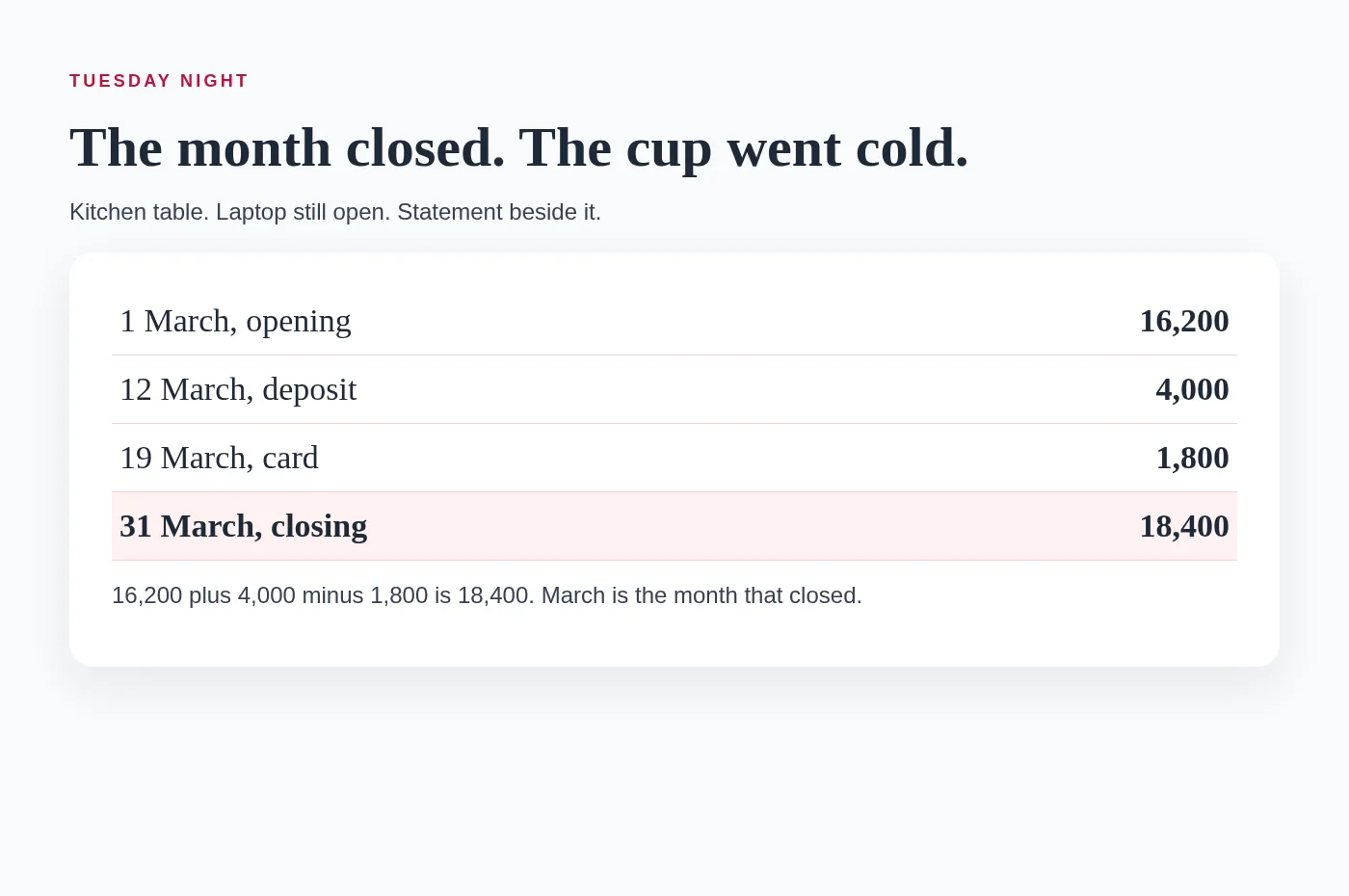
An outsourced bookkeeper can take the matching off a weeknight. A Tax CFO takes that same matching, then uses the closed month to decide what you should pay yourself, what to set aside before the next federal estimate, and what the coming quarter should change. The evenings you get back are evenings, not a new place to worry. Two approvals stay yours.
Talk about the evenings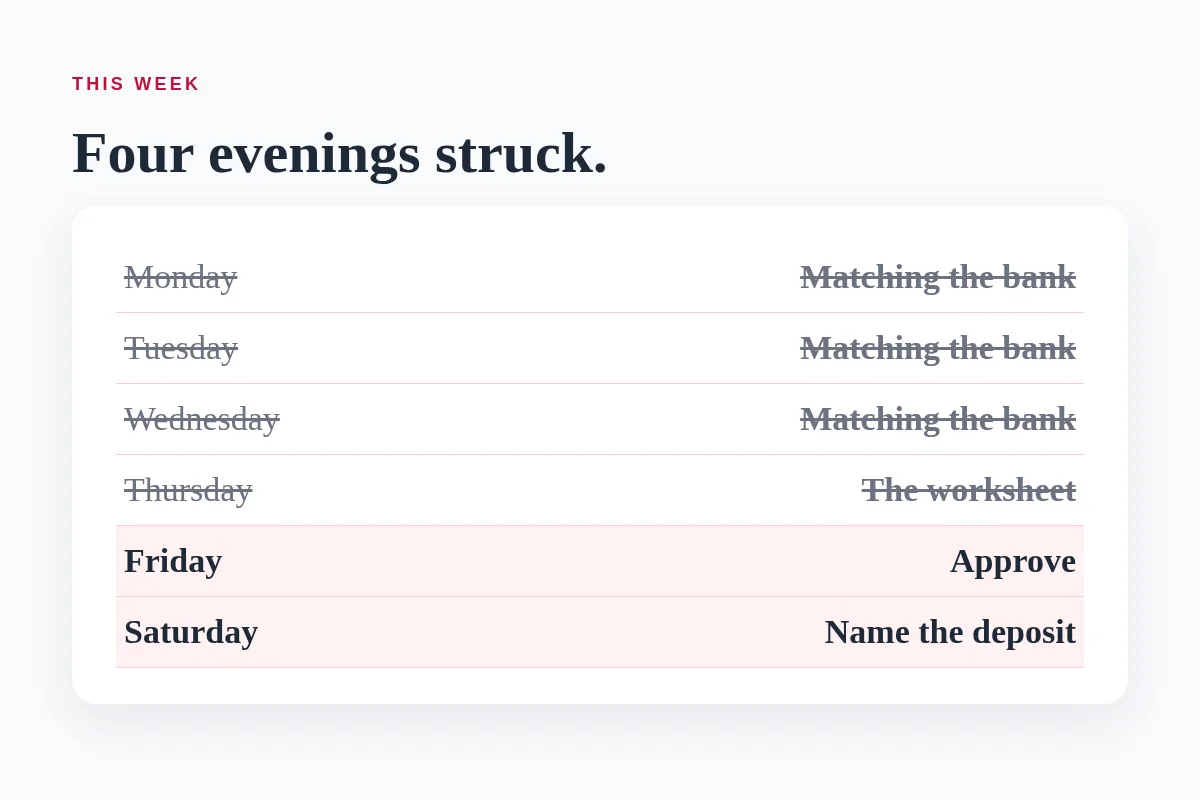
The evenings we want back are the quiet ones spent matching the bank. Four of those a month can leave once the file can hold a close, and the two approvals stay written in your hand.
Click to see which hours leave ›Tap to see which hours leave ›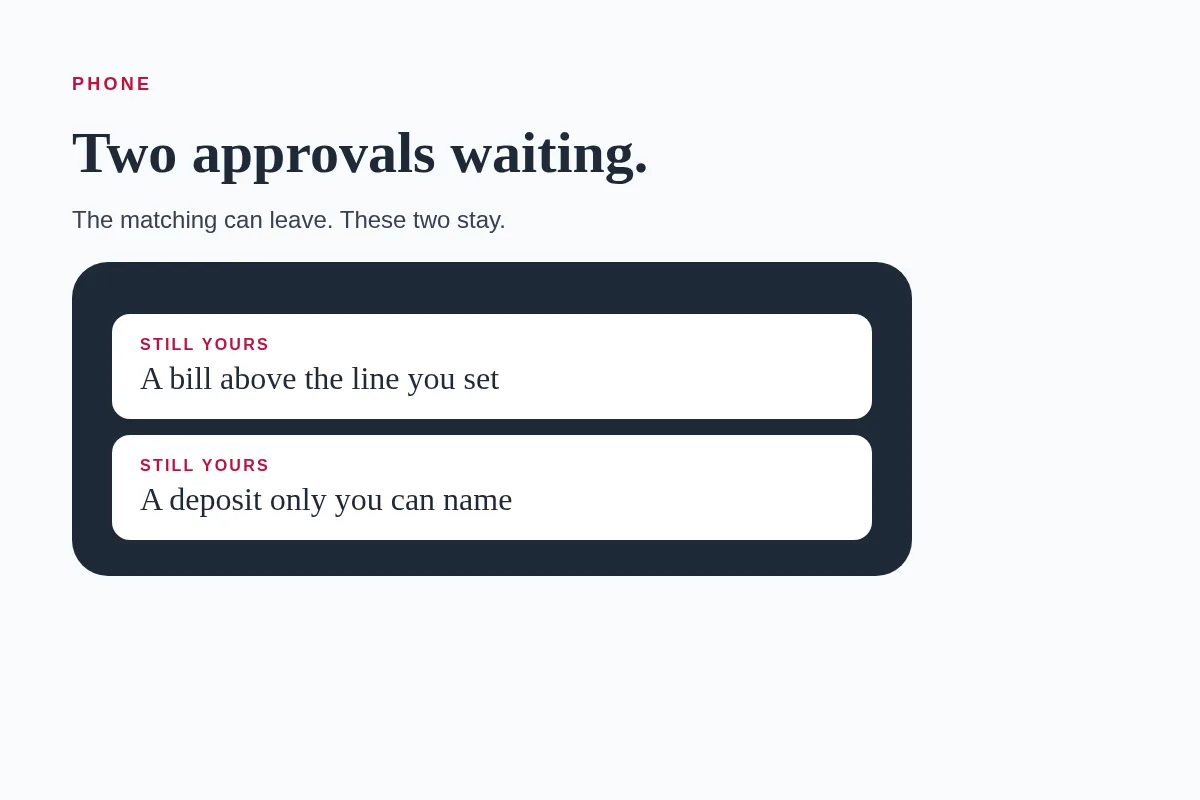
Some hours should stay with you. The bill above a line you set, and the deposit only you can name, are the two that do not move even when the matching does.
Click to see when keeping wins ›Tap to see when keeping wins ›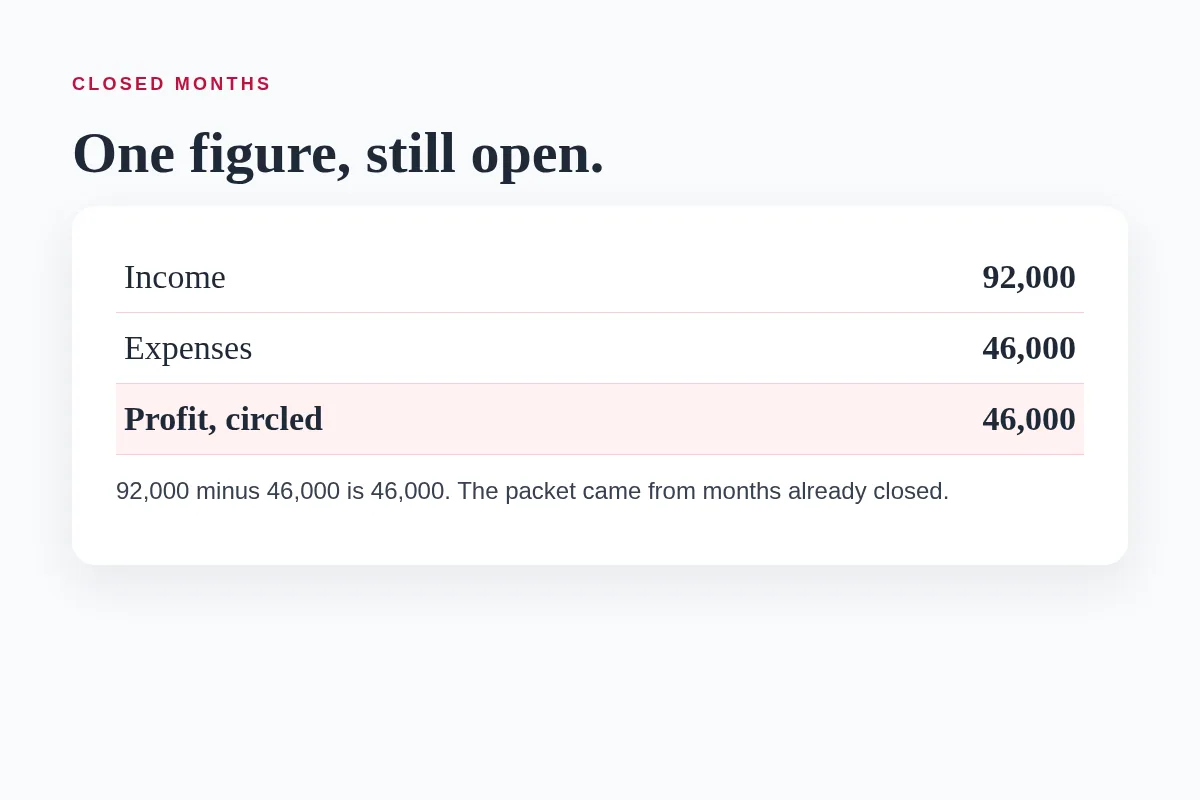
The return still comes from months that already closed, whether or not you were the one closing them. One figure on that return can still be talked through while the year can change.
Click to see the return ›Tap to see the return ›A federal estimate does not need a counter in your town. The worksheet can leave your Tuesday, and you still see the figure before anything is paid.
Click to see a remote week ›Tap to see a remote week ›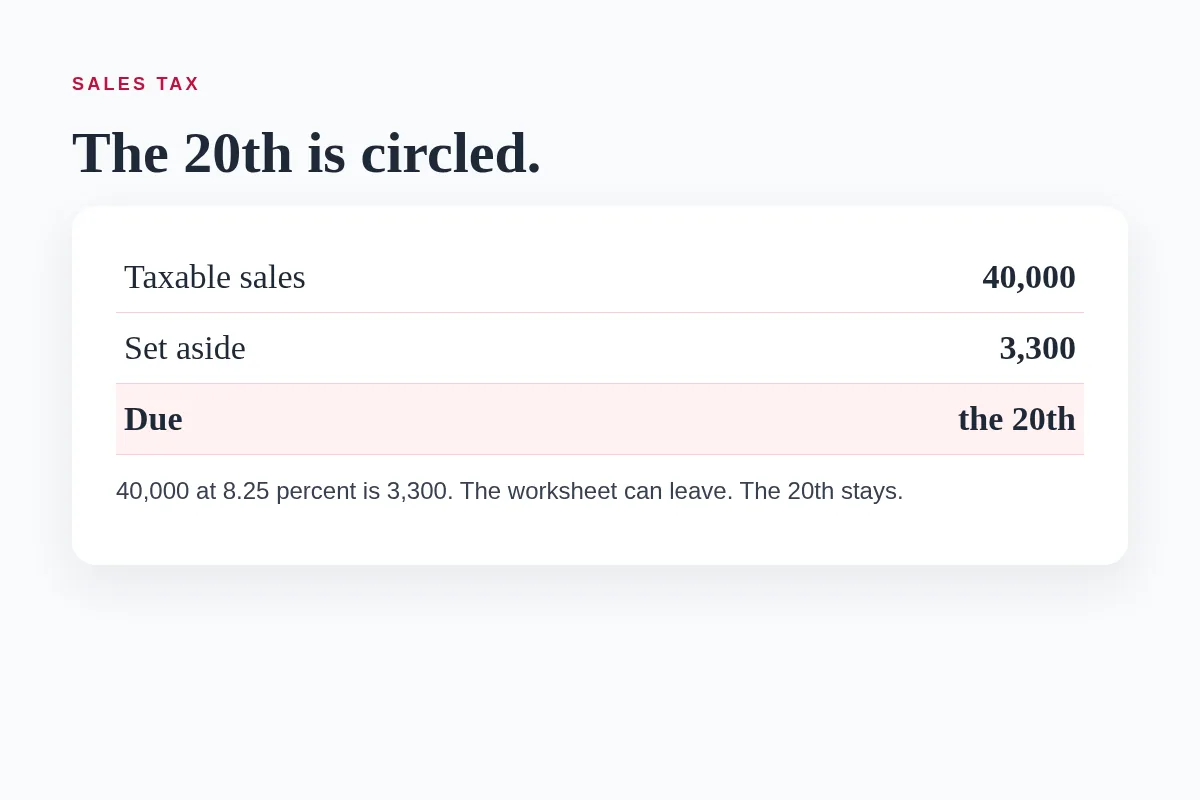
A startup week is often one person and a pile of unnamed deposits. We mark what can leave, and if nothing should, the week stays in ink.
Click to bring your week ›Tap to bring your week ›Bills above a line you set, and a deposit you have to name, are the two that stay.
Click to read the questions ›Tap to read the questions ›The Tax CFO on these evenings is Steven Palmieri, the Entrepreneur's CFO. Once the books are closed, the Tuesday you used to spend matching the bank can be an ordinary Tuesday again, and the two approvals are still in your hand.
Click to meet the practice ›Tap to meet the practice ›Keeping the books yourself was a way to keep control. Plenty of owners arrive from that choice, tired and still curious, with one company and no second person for the close.
Three endings are honest. The hours can stay yours. A hire can take them when the week is daily bills and someone is already in the room. Or an outside close can take the matching and leave you two approvals.
Open months block the move. If the file is behind, the first conversation is about whether it can support a close, not about a tour of every odd account. We say so when that is the truth.
What comes back, if the file can hold it, is evenings. Week by week the matching leaves, and the two approvals stay in ink. A bill above the line you set still needs you. A deposit you have to name as a loan or a sale still needs you.
The worksheet can leave the night you used to build it. A federal estimate comes due on its own date in April, June, September, and January. You still see the figure before it is paid. The date does not move to someone else's name without you looking.
Setup can be prepared here, on a provider you already run. The hour where you approve payday stays on your week. Running payday does not move. Wage accounts get opened here so the provider you already run and the books name one pay.
Once the evenings have moved, the monthly work is described by counts. How many accounts, how many entities, how current the file is. No dollar figure is printed for that work on this site.
The feeling people describe is the struck cells, not a slogan. The close is still a date. Breadth, on a week this small, is the books and the return leaving from the same months. Height is a decision about the year still getting a meeting after those evenings are no longer yours.
A picture of that week lives on its own page, with your file left off it. Nobody counted a sample of hours to draw it. If you want the rows marked against the week you actually live, bring that week.
We meet you by video with the books shared, and the two approvals stay in your handwriting. The close lands on the same day each month, whichever state the company sits in.
You will be talking to the Steven Palmieri practice.
A sentence about the week is enough.